


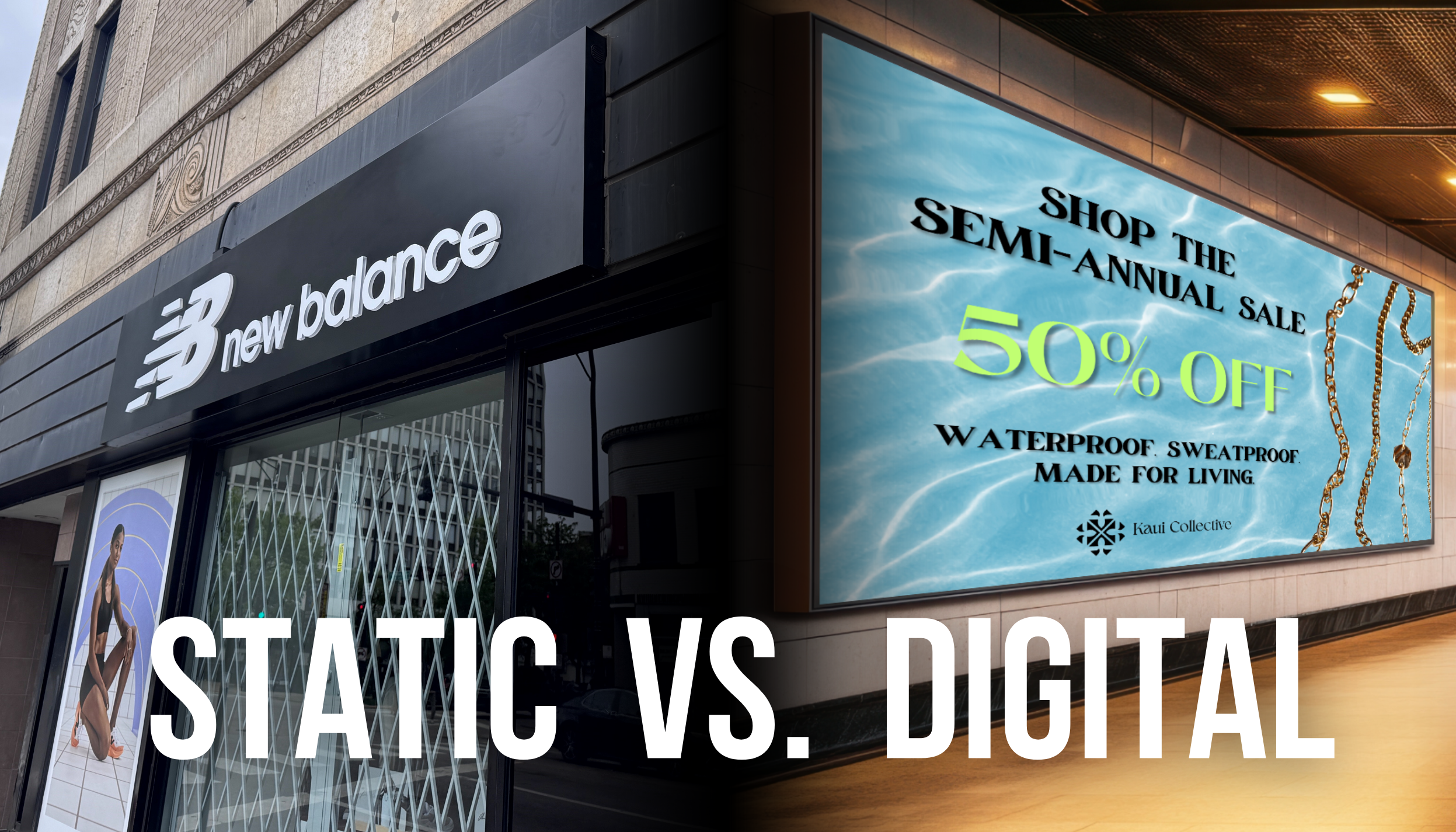
When choosing between static and digital signs, the decision boils down to cost, flexibility, and engagement. Static signs are more affordable upfront and ideal for permanent messaging, while digital signs, though pricier initially, deliver higher customer engagement. Here’s what you need to know:
- Static Signs: Lower upfront cost, fixed messaging, minimal maintenance. Best for businesses with consistent branding or permanent information.
- Digital Signs: Higher initial investment, but reduced update costs. Offers dynamic messaging, remote updates, and better audience interaction.
Quick Comparison:
| Feature | Static Signs | Digital Signs |
|---|---|---|
| Upfront Cost | Low to Mid | High |
| Repair Costs | Low to Mid | Mid to High |
| Engagement | Low | High |
| Lifespan | Long with minimal updates | Require maintenance, shorter lifespan |
| Ease of Updating | High – requires manual changing | Low – make changes remotely |
Cost Analysis: Initial Investment and Ongoing Expenses
When evaluating signage costs, it’s important to think beyond the initial price tag. While static signs might appear to be the cheaper option up front, the long-term expenses often tell a different story.
Initial Costs of Static vs. Digital Signs
Static signs tend to have a lower upfront cost. These expenses usually include design and project management services, materials like vinyl or metal, and installation. Depending on the size and complexity, costs can range from a few hundred dollars to several thousand per sign.
On the other hand, digital signs require a much larger initial investment. This includes commercial-grade displays, media players, software licenses, specialized installation, and higher permitting costs due to specification around the engineering of the sign structure due to a heavier load.
This upfront difference is significant – digital signage can cost 10 to 15 times more than static signage initially. However, the brand awareness, interactivity, and dynamic nature of digital signage can shift the balance in favor of digital solutions.
Ongoing Costs and Maintenance
Brands should consider their needs and customer preferences when weighing the ongoing costs and maintenance of static versus digital signage. And it’s important to differentiate between permanent static signage (e.g. the store’s main sign above the entrance, etc.) versus temporary signage (e.g. promotional graphics that go in a storefront window, like Black Friday deals). Permanent static signage is requirement for almost every brand, even ones that have low traffic. Permanent signage:
- boosts brand visibility recognition,
- helps people find your location; and
- is stable long-term brand investment.
Temporary signage can be a low-cost way to communicate brand messaging, promotions, and other information to customers and clients. However, for brands that regularly need to shift their messaging–like a clothing brand with deals, collections, and seasonal offerings that change often–the cost of constantly changing temporary signage can quickly add up. These costs might include printing, shipping, installation labor, and more.
Digital signs work differently. While they do require electricity – about 100–200 watts per 55-inch LED display, translating to $100–$200 per year per sign at average U.S. electricity rates – they eliminate the need for physical updates. Software subscriptions and occasional repairs are additional costs, but the ability to update content remotely at no extra charge significantly reduces overall expenses.
The frequency of updates really is the game-changer here. Static signs require new materials and labor for every update, while digital signs allow instant, remote updates at no extra cost. This makes digital signage an ideal choice for industries like retail, banking, and quick-service restaurants where frequent content changes are essential.
Next, we’ll explore how these costs translate into audience engagement and brand impact.
Performance Metrics: Engagement and Impact
Evaluating the performance of signage is essential for making informed ROI decisions. According to Digital Signage Today, digital signage captures 400% more views than static signage, which could fundamentally alter how customers engage with your messaging.
Engagement and Viewership
Digital Signage Today also revealed that digital signage delivers impressive results, achieving recall rates of 83% and bcan make a brand awareness almost 48% more effectives.
Thanks to features like motion and interactivity, digital displays encourage longer dwell times compared to static signs. These improved engagement metrics pave the way for tangible sales growth and enhanced brand visibility.
When it comes to viewer engagement, digital signage is the clear winner, providing compelling messaging and movement to capture viewers’ attention and drive brand interactions.
Impact on Sales and Brand Perception
The benefits of digital signage go beyond engagement – they directly impact sales and brand image. Over 40% of consumers say digital signage influences their purchasing decision.
Quick-service restaurants also reap the rewards, as dynamic digital menu boards can increase engagement to drive sales and reduces overall operational costs in the long term.
Beyond immediate sales, digital signage can impact how customers perceive a brand. Businesses using digital displays are often viewed as modern, customer-oriented, and tech-savvy. Generally, brands that implement digital signage see increases in outreach and customer engagement.
Digital signage also provides actionable insights through analytics. Businesses can track user interactions, measure dwell times, and identify which content resonates most. This data enables ongoing refinement of messaging strategies. Additionally, the ability to deliver real-time, targeted updates – adjusting content based on factors like time of day, weather, inventory, or customer demographics – ensures messaging stays relevant and impactful.
For businesses weighing their signage options, the performance benefits of digital displays are hard to ignore. When frequent updates, measurable engagement, and direct sales impact are priorities, digital signage stands out as a smart investment. However, to maximize ROI, factors like durability and maintenance should also be considered.

Maintenance and Lifespan Considerations
When it comes to long-term ROI, evaluating the durability and upkeep of signage is just as important as considering upfront costs. Both static and digital signs have unique maintenance needs and lifespans that can significantly impact their overall value over time.
Durability and Expected Lifespan
Static signs are known for their sturdy build and ability to last for years. Their lifespan largely depends on the materials used and how well they withstand environmental factors like rain, wind, and sun. On the other hand, digital signs, powered by electronic components such as LED displays, face challenges like physical wear and the rapid pace of technological advancements.
Maintenance Requirements for Each Type
Static signs are relatively low-maintenance. Keeping them in good shape usually involves simple tasks like cleaning, repainting, or making minor repairs to address weather damage.
Digital signs, however, come with more demanding upkeep. They require not only regular cleaning and hardware checks but also software updates and system monitoring to ensure they run smoothly and securely. When electronic issues arise, fixing them often requires specialized skills, which can add to the overall cost of ownership.
How to Choose Between Static and Digital Signs
Deciding between static and digital signage comes down to balancing your business goals, budget, and operational needs. It’s not just about the upfront costs – it’s about identifying which option delivers the best long-term value for your specific situation.
When to Choose Static Signs
Static signs are a great choice for businesses that need permanent branding or regulatory information. They provide consistent visibility with little to no maintenance required. For small businesses displaying fixed details like their name, hours of operation, or safety notices, static signage offers a practical solution that’s simple and effective.
These signs are particularly well-suited for situations where the message won’t change over time. Think of permanent wayfinding signs, building identification, or regulatory notices. In these cases, the durability and straightforward nature of static signage make it a cost-effective option. Since there’s no need for regular updates, the lower upfront investment and minimal upkeep often make static signs a better return on investment compared to more complex alternatives.
When to Choose Digital Signs
Digital signs shine in environments where frequent content updates and high customer engagement are key to driving results. While the initial investment may be higher, the ability to update content instantly – without printing or installation costs – offers significant savings over time.
Retailers, in particular, see strong benefits from digital signage. Studies show that 80% of brands experience sales increases of up to 33% with digital displays. The flexibility to update promotions in real-time, experiment with messaging, and quickly adapt to market trends provides an edge that static signs simply can’t match.
For businesses with multiple locations, digital signage offers centralized management, making it easy to maintain consistent messaging across all sites. This eliminates recurring update expenses and improves efficiency, which is especially valuable for national brands and franchises.
Digital signage also excels in high-traffic areas where grabbing attention is critical. With recall rates as high as 83% and the ability to attract 400% more views than static signs, digital displays are a powerful tool for boosting engagement and driving revenue.
| Factor | Choose Static When | Choose Digital When |
|---|---|---|
| Message Updates | Content rarely changes | Frequent updates are needed |
| Budget Priority | Lower upfront cost | Long-term savings matter more |
| Engagement Goals | Basic visibility is enough | High customer interaction is key |
| Location Type | Single site with stable messaging | Multiple locations needing coordinated campaigns |
| Payback Timeline | Short-term cost control | Acceptable ROI within 18 months |
For businesses looking to maximize their investment, the next section explains how North American Signs can simplify your signage strategy.
How North American Signs Supports Long-Term ROI
Selecting the right type of signage is just the first step – ensuring it performs well over time is where North American Signs comes in. We provide end-to-end services, from design and manufacturing to installation and maintenance, ensuring your signage remains effective for years to come.
For businesses with multiple locations, our expertise in project management and access to a national network make rollouts seamless and consistent. This is especially critical for brand conversions or multi-site projects where timing and uniformity are essential.
Our maintenance services are designed to protect your investment by reducing downtime and extending the life of your signage. Whether it’s occasional repairs for static signs or software updates and hardware monitoring for digital displays, our support ensures your signage continues to deliver results.
Conclusion: Maximizing ROI with the Right Signage Choice
Here are the key elements to consider:
- Brands must align their choice with business goals. Static signs may have a lower upfront cost, but digital signage sometimes proves to be the smarter long-term investment, thanks to lower operational expenses and stronger customer engagement.
- Static signage is still a must-have for all brands to create strong brand awareness and ensure wayfinding is easy for customers and clients.
- Digital signage has been shown to drive noticeable sales growth and cut costs over time. Its ability to engage customers more effectively often translates directly into higher revenue, making it an excellent option for businesses that need to deliver dynamic, ever-changing messages.
- To get the most out of your signage investment, it’s essential to start with a clear plan. Assess your specific needs, such as how often you’ll need to update content, your engagement goals, and your long-term strategy. For businesses that require frequent updates or real-time messaging, digital signage often pays for itself within 18 months.
Of course, achieving these benefits requires the right partner. Working with an experienced provider ensures seamless implementation and ongoing support. North American Signs, for instance, offers end-to-end solutions, from consultation to maintenance. With over 800 successful installations in 2024 and 90 years of expertise, they’re well-equipped to help businesses maximize their ROI.
Ultimately, whether you choose static or digital signage, aligning your investment with your strategic goals ensures long-term success. When properly planned and professionally executed, the right signage becomes a powerful tool for driving growth and strengthening your brand presence for years to come.
FAQs
What are the long-term cost differences between digital and static signage, including maintenance and updates?
Digital signage often comes with a higher initial price tag compared to static signage, but it can lead to notable savings in the long run. One key advantage is the ability to update content remotely, which eliminates the hassle and cost of physical replacements. Plus, the flexibility of dynamic content can draw more attention and even boost customer engagement.
Static signs, by contrast, tend to have a lower upfront cost. However, temporary static signage might need more frequent updates or replacements, especially when branding or messaging evolves. Deciding between the two options ultimately hinges on your business priorities, budget, and long-term objectives.
Which industries or businesses see the greatest benefits from using digital signage for customer engagement?
Digital signage plays a key role in industries where dynamic content and real-time updates are crucial. Businesses in retail, hospitality, and corporate settings often see the greatest advantages. Why? Because digital signs can be updated instantly to showcase promotions, highlight menu changes, or share critical announcements. This ability to adapt on the fly not only grabs attention but also enhances the overall customer experience.
For companies aiming to boost engagement and project a sleek, modern vibe, digital signage provides a lasting solution. It evolves with business needs and delivers results you can track and measure.
What’s the best way to measure the long-term ROI of digital signage?
To gauge the long-term return on investment (ROI) of digital signage, businesses need to consider several key factors. Begin by weighing the upfront costs and ongoing maintenance expenses against tangible benefits like higher sales, stronger customer engagement, or greater brand recognition.
Don’t overlook the lifespan of the technology and the likelihood of future upgrades. Monitoring performance metrics – such as foot traffic, sales conversion rates, or customer feedback – can provide a clearer picture of how effectively your signage aligns with your business objectives.
0 Comments